
In today’s fast-paced digital world, having an online presence is no longer a choice—it’s a necessity. As consumers increasingly rely on the internet to discover products, compare services, and make purchasing decisions, businesses must adapt to meet them where they are. Digital marketing has transformed the way brands connect with their audience by offering cost-effective, measurable, and highly targeted strategies. Whether you’re a startup, a small business, or an established enterprise, digital marketing provides the tools needed to build brand awareness, generate leads, and achieve sustainable growth.
Why Digital Marketing Matters
Traditional marketing methods often rely on broad messaging with limited targeting. Digital marketing, on the other hand, enables businesses to reach the right audience at the right time. By leveraging channels such as search engines, social media platforms, email marketing, and paid advertising, brands can engage potential customers based on their interests, demographics, and online behavior.
One of the biggest advantages of digital marketing is its ability to provide measurable results. Businesses can monitor website traffic, track conversions, analyze customer behavior, and optimize campaigns in real time. This data-driven approach helps maximize return on investment while ensuring every marketing effort contributes to business objectives.
Key Components of a Successful Digital Marketing Strategy
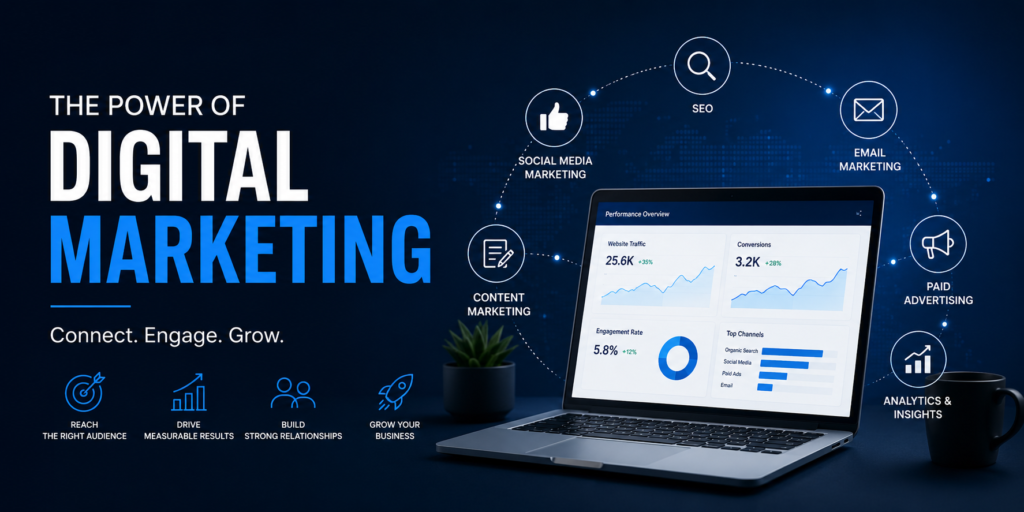
An effective digital marketing strategy combines multiple channels to create a seamless customer experience. Search Engine Optimization (SEO) improves website visibility on search engines, making it easier for potential customers to find your business organically. Social Media Marketing helps build brand awareness, engage audiences, and foster meaningful relationships. Performance Marketing focuses on generating measurable results through targeted advertising campaigns, while Content Marketing provides valuable information that educates, informs, and builds trust with customers. Email Marketing further strengthens customer relationships by delivering personalized communication and nurturing long-term engagement.
The Future of Digital Marketing
As technology continues to evolve, digital marketing is becoming more intelligent, personalized, and customer-centric. Artificial Intelligence, automation, predictive analytics, and data-driven decision-making are reshaping how businesses interact with their audience. Companies that embrace these innovations while maintaining authentic customer relationships will be better positioned to stay competitive in an ever-changing digital landscape.
Conclusion
Digital marketing is more than just promoting products online—it’s about creating meaningful connections, understanding customer needs, and delivering measurable business results. A well-planned digital marketing strategy enables businesses to increase visibility, attract high-quality leads, improve customer engagement, and achieve long-term success. By combining creativity with analytics and continuously adapting to market trends, businesses can unlock new opportunities and build a strong foundation for sustainable growth in the digital era.