
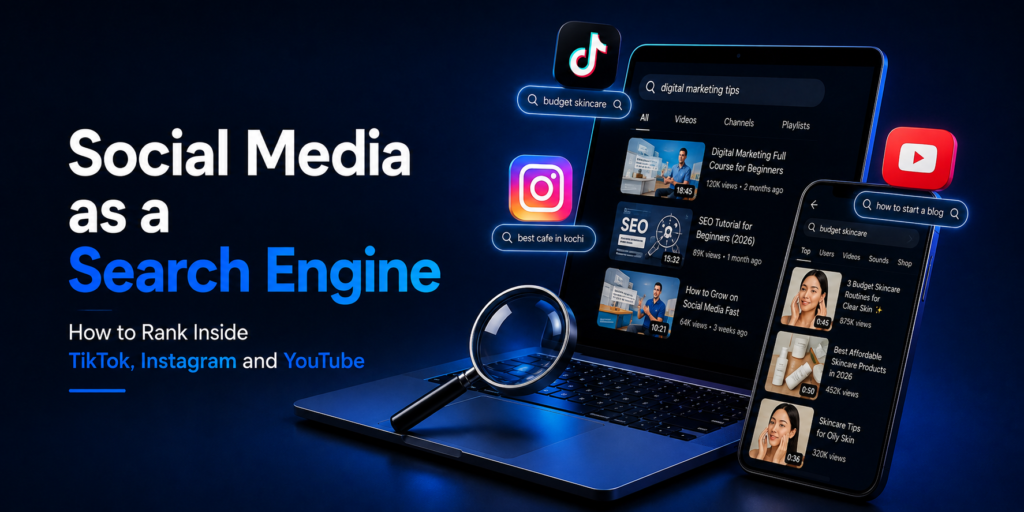
People don’t always open Google anymore. Many start their search directly inside TikTok, Instagram or YouTube when they want reviews, tutorials or recommendations. This shift means social platforms now work like search engines and your content can be discovered not by scrollers but by people actively looking for answers. If you treat media as a search engine and optimize your posts and videos for it you can appear in results even with a smaller following
Why Social Platforms Feel Like Search Engines
Apps like TikTok, Instagram and YouTube use AI to understand what your content is about through captions, audio, on-screen text and descriptions. When someone types a query like ” budget skincare” or “how to start a blog ” the platform tries to match it with relevant videos and posts. This is why many users now treat these apps as their stop for research especially younger audiences. For creators and brands this creates an opportunity: you can rank in search results based on how well your content matches what people are searching for
How TikTok Ranks Content for Search
TikTok is built around discovery and its search system rewards content that is clear, engaging and easy to understand. Key signals include
Keywords in audio and captions: Saying your target phrase in the few seconds and using it in the caption helps TikTok know what your video is about
On-screen text: Text overlays act like titles that the algorithm can read
Watch time and replays: If people watch your video fully or rewatch it TikTok sees it as valuable and shows it often
Saves and shares: These are strong signals that your content is useful enough to keep or send to someone else
A simple example: a video titled “3 budget skincare routines for oily skin” that mentions the phrase early shows it on screen and uses it in the caption is more likely to rank when someone searches that exact query
How Instagram Ranks Content for Search
Instagram search looks at your profile, captions, Reels and even alt text to decide what to show. Important tactics include
Keyword- bio and display name: Adding your niche or service in your name and bio helps Instagram and even Google index you
Searchable captions: Leading captions with a clear phrase (instead of just emojis) improves discoverability
Reels over static posts: Reels are prioritized in Explore and keyword search results
Alt text and location tags: Adding descriptive alt text and geo-tags supports search for local businesses
For example a Kochi-based café using “Kochi café” and “best Kerala breakfast” in captions alt text and location tags can rank when nearby users search for those terms
How YouTube Ranks Content for Search
YouTube is the most traditional “search-like” platform of the three with titles, descriptions and transcripts playing a major role. Key ranking factors
Title optimization: Putting the keyword in the first 60 characters of the title strongly influences ranking
Description as a mini-article: A 200–300 word description with natural keyword usage helps YouTube understand context
Chapters and transcripts: Using chapters with keyword-led labels and uploading accurate transcripts improves indexing
Watch time and engagement: Videos that keep viewers watching and generate comments tend to rank higher in search and suggested videos
A tutorial titled “How to start a blog in 2026 (step-by-step)” with matching keywords in the description, chapters and spoken content is more likely to appear in search results than a vague title like “My blogging journey”
Differences Between TikTok, Instagram and YouTube Search
While all three platforms rely on keywords and engagement they weigh different signals
TikTok prioritizes on-screen text, spoken audio and early engagement
Instagram leans heavily on captions, keywords in bio and Reels performance
YouTube depends most on titles, descriptions, full transcripts and watch time
Understanding these differences helps you tailor the idea for each platform instead of posting identical content everywhere
Simple Workflow to Rank on All Three
Find search phrases: Use each platform’s search bar to see what people type for your topic
Create answer-focused content: Turn top questions into short videos that directly address the query
Optimize metadata: Use keywords in titles, captions, audio, on-screen text and descriptions
Encourage engagement: Ask questions use CTAs and design content that invites saves and shares
Refresh and repurpose: Update videos with new info and reformat top-performing content for each platform
In short treating TikTok, Instagram and YouTube as search engines means thinking like both a creator and an SEO specialist: research what people search, create clear useful content and optimize every element so the platform can easily understand and rank it
FAQs
What is Social SEO?
Social SEO is the practice of optimizing your social media content so it can be found inside platform search results not in feeds
Do I need a large following to rank in social search?
No. Social search focuses more on relevance, engagement and keyword use than follower count
Which platform is best for search?
It depends on your audience. TikTok and Instagram are strong for form, visual queries while YouTube is better for in-depth tutorials and reviews
How often should I update my content for search?
Regular updates help. Refreshing old videos, with info or creating new versions of popular topics can boost visibility
Can small businesses benefit from social search?
Yes, especially local businesses. Using location-based keywords alt text and clear descriptions can help nearby customers find you